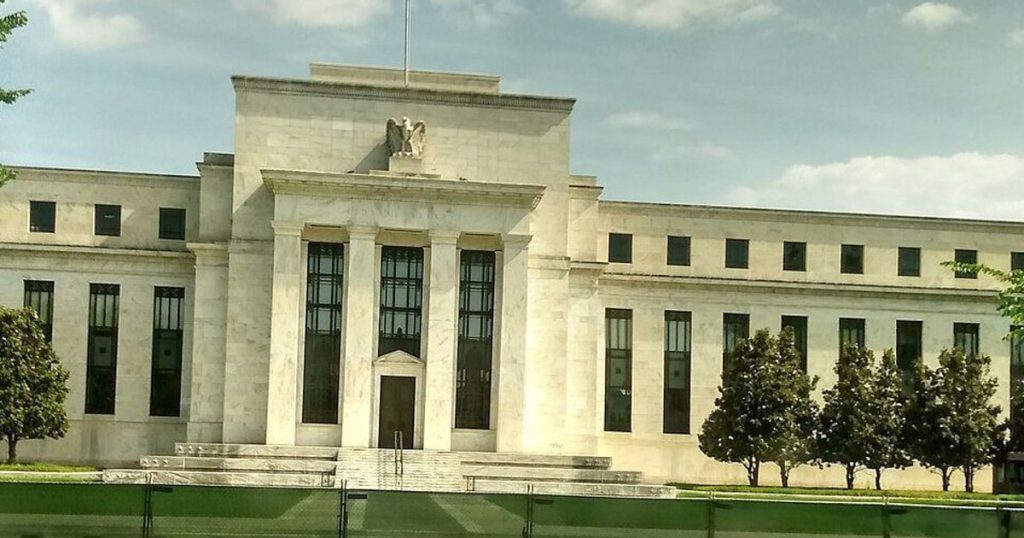
The US labour market showed signs of weakening in September, raising fresh concerns about the economy’s resilience. Employment growth fell considerably below economists’ expectations, while unemployment increased and previous hiring figures were revised downwards. These developments have renewed uncertainty surrounding the Federal Reserve’s plans to raise interest rates further before the end of 2026.
September hiring disappoints
Figures released by the Bureau of Labor Statistics on October 2 showed that the US economy added just 29,000 jobs in September, significantly below the 88,000 anticipated by economists surveyed by Bloomberg. August’s employment gains were revised downwards to 133,000, while July recorded a loss of 10,000 positions. Combined revisions removed another 60,000 jobs from the previous two months. Meanwhile, the unemployment rate climbed from 4.1% in August to 4.2% in September.
Hiring weakened across several industries, particularly healthcare, which had previously supported employment growth. Financial-sector employment also continued contracting, reinforcing concerns about slowing economic activity. Jeff Schulze, head investment strategist at Franklin Templeton, characterised the latest figures as evidence of a cooling rather than overheating labour market.
Fed faces difficult decision
The disappointing report complicates the Federal Reserve’s monetary policy outlook following September’s 25-basis-point rate increase, its first in three years. Chair Kevin Warsh previously defended the decision by highlighting persistent inflation and relatively healthy employment conditions.
Following Friday’s release, market expectations of another October increase declined from 29% to approximately 23%. Two-year Treasury yields initially dropped to 4.69% before recovering to 4.84%. Nevertheless, traders still assigned roughly an 85% probability to borrowing costs being higher by year-end.
Economists at Vanguard and Jefferies suggested the weaker employment figures strengthened arguments for delaying further tightening. Despite uncertainty, US equities finished higher, with the S&P 500 gaining 0.7% and the Nasdaq 100 advancing 1% to a record closing high.
