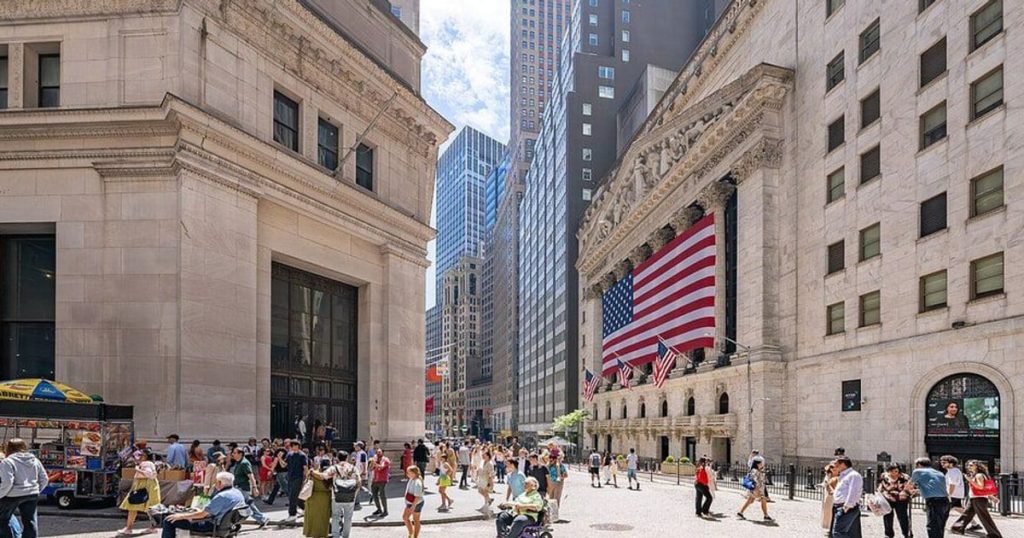
Wall Street rallied Friday after July’s unexpected payroll decline forced investors to rethink the Federal Reserve’s next move. The surprising reaction captured a central tension in financial news and economic news: weaker hiring can support stocks when it cools rate-hike expectations, offering stock market insights into policy-driven sentiment for investors.
Weak jobs fuel market rally
U.S. nonfarm payrolls fell by 23,000 in July, far below economists’ expectations for an 80,000 increase. May and June payrolls were revised down by a combined 103,000. The unemployment rate stood at 4.1%, while labor-force participation slipped, reinforcing evidence that hiring momentum had weakened.
Markets reacted immediately. The S&P 500 gained 0.62%, the Nasdaq rose 1.30%, and the Dow also advanced. September rate-hike odds dropped to about 44% from roughly 55% a day earlier, while Treasury yields and the dollar eased. Strong earnings added support. Still, the rally posed an important question: Can weaker hiring remain bullish if it points to slower growth? Investors appear encouraged by reduced pressure for another Fed increase. Yet the jobs report alone cannot settle the policy debate while inflation remains above target.
Inflation tests Fed hike outlook
With the policy debate unresolved, attention now turns to July inflation data, which could determine whether the rally has staying power. Economists expect headline consumer inflation to rise 3.4% year over year, while core inflation is forecast at 2.5%. Persistent inflation could revive rate-hike expectations, while easing price pressures could strengthen the case for Fed patience.
That makes inflation the market’s next decisive test. If price pressures ease while employment and corporate earnings remain resilient, the rally could develop a stronger foundation than lower rate-hike expectations alone would suggest. Investors still need discipline, but the opportunity is becoming clearer.
A healthier balance between cooling inflation, steady job growth, and supportive monetary policy could encourage investment and business expansion. If those forces align, today’s rally could mature into a broader cycle of earnings strength, economic resilience, and sustainable market growth.
