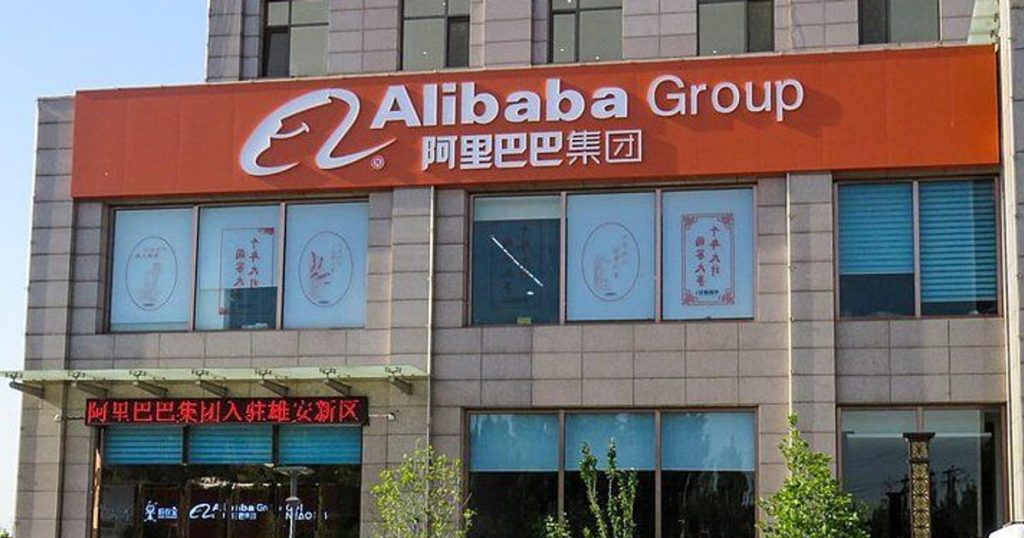
Microsoft may have the broader cloud and AI ecosystem, but Alibaba is stepping up its challenge with a major expansion spanning chips, models and data centres. The Chinese tech giant has unveiled new hardware while outlining plans for AI models several times larger than its current flagship. Shares in Alibaba rose 5.1% in Hong Kong following the announcements, reaching their highest level in a month.
Alibaba goes bigger
At its Apsara conference, Alibaba unveiled the Zhenwu V900, an AI chip developed by its T-Head semiconductor unit. Chief Executive Eddie Wu said the processor delivers three times the performance of its M890 predecessor and can be connected in clusters containing as many as 500,000 chips. Mass production and commercial availability are planned for the first quarter of 2027.
Beyond hardware, the company is developing AI models with between 5 trillion and 10 trillion parameters. Its current flagship Qwen 3.8 Max uses 2.4 trillion parameters, meaning future models could be several times larger. Alibaba also wants its global cloud data-centre capacity to exceed 20 GW by 2032 as AI demand continues to accelerate.
Those plans build on already strong cloud growth. Alibaba Cloud’s external revenue recently climbed 45% year over year, while AI-related product revenue has recorded triple-digit growth for 12 consecutive quarters and represents roughly 35% of external cloud sales.
Microsoft stays strong
Microsoft still enters the contest with considerable scale. Azure and other cloud services revenue increased 43% in its latest reported quarter, while Microsoft Cloud generated $214.4 billion across fiscal 2026.
AI adoption is also spreading through Microsoft’s existing software business, with Microsoft 365 Copilot surpassing 30 million paid seats. Full-year operating income rose 21% to $155.2 billion despite heavy spending on AI infrastructure.
Alibaba’s latest announcements add new hardware and much larger models to its AI strategy, but the companies face different challenges. Microsoft is spending heavily to expand AI capacity, while Alibaba must fund its AI ambitions alongside other businesses and navigate supply constraints as it scales its cloud infrastructure.
