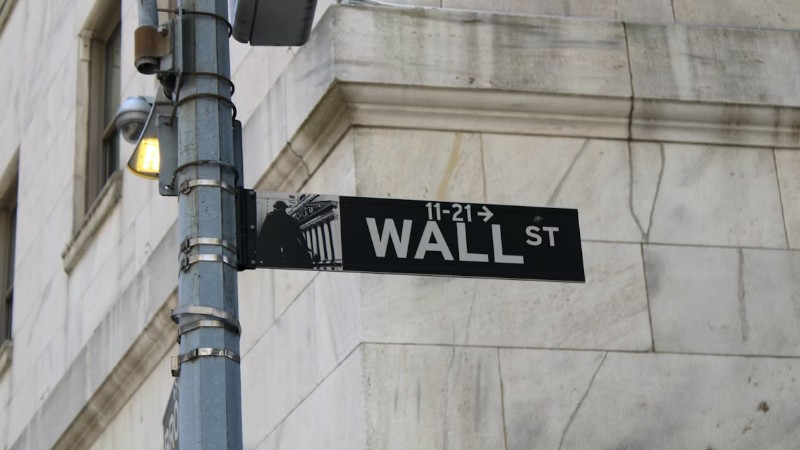
Wall Street stumbled sharply on Thursday as renewed concern over an overheated AI sector collided with growing uncertainty about U.S. interest-rate policy. The downturn drew attention across major financial centres, where investors closely track U.S. market swings that often spill over into global trading.
The trading session turned negative early, with major U.S. indexes sliding away from the record highs set only weeks ago. The S&P 500 finished the day with a 1.7 percent loss, while the Dow Jones shed almost 800 points. The Nasdaq posted an even steeper decline as technology names absorbed most of the pressure.
AI momentum falters
Nvidia pulled the tech-heavy index lower after another drop in share price, and several of the year’s strongest AI beneficiaries joined the slide. Super Micro Computer, Palantir and Broadcom all retreated sharply, erasing part of the spectacular gains that had fuelled the market’s climb through summer and autumn.
The enthusiasm that once surrounded these companies has given way to comparisons with the dot-com era, a reminder of how quickly sentiment can shift when valuations run ahead of fundamentals.
Market sentiment weakened further after fresh doubts emerged about a possible U.S. rate cut in December. Boston Fed President Susan Collins signaled that borrowing costs may need to remain unchanged for longer, a view that unsettled traders already navigating delayed economic data following the lengthy U.S. government shutdown.
Market reactions diverge
Company-specific moves added to the turbulence. Disney sank after missing revenue expectations, while Cisco moved higher on stronger results. Berkshire Hathaway also gained as investors sought steadier names. Rising U.S. Treasury yields pushed markets lower worldwide, and European exchanges slipped in response.
Trading in Asia delivered mixed signals, with Tokyo’s Nikkei edging up despite further losses at SoftBank. Bitcoin also retreated, falling back under the $99,000 mark after reaching far higher levels earlier in the month.
