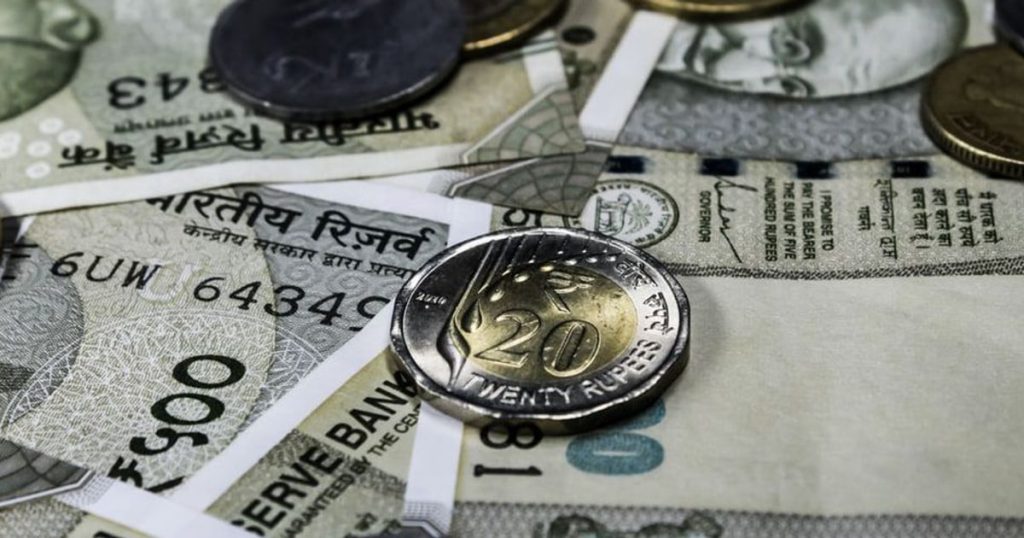
The Indian Rupee strengthened against the US Dollar for a fifth consecutive trading day on October 16, supported by central bank intervention and a weaker Greenback. Measures introduced by the Reserve Bank of India (RBI) have helped stabilise the currency after months of pressure. However, analysts warn that rising oil prices, foreign investment outflows and global economic uncertainty could undermine the recovery.
RBI measures support Rupee recovery
The USD/INR exchange rate fell to 94.69 on Friday, its lowest level in more than five weeks. Meanwhile, the US Dollar Index declined towards 101.80, reaching a ten-day low. India’s central bank has introduced several measures to reduce Dollar demand, including restrictions on certain currency derivatives, additional reserve requirements and a special Dollar window for oil companies.
FXStreet reported that these actions helped strengthen the Rupee, although their longer-term effectiveness remains uncertain. Federal Reserve Chair Kevin Warsh’s recent remarks contributed to Dollar weakness. His emphasis on price stability, investment growth and artificial intelligence offered limited guidance on future interest rates. Markets nevertheless expect the Fed to maintain rates in October before potentially raising them in December.
Analysts question lasting gains
DBS Group Research economist Radhika Rao believes the RBI’s intervention can limit currency losses without necessarily reversing the broader depreciation trend. The bank highlighted elevated oil prices, geopolitical tensions and weak foreign capital flows as continuing risks. Higher US Treasury yields and a relatively strong Dollar further complicate India’s currency outlook.
OCBC strategists similarly warned that recent measures primarily redirect Dollar demand rather than reduce the country’s underlying requirements. Their assessment suggests additional short-term gains remain possible, but sustained appreciation depends on improving external conditions. Technical indicators reinforce this cautious outlook. USD/INR remains below its 20-day exponential moving average of 95.76, with support near 94.29.
