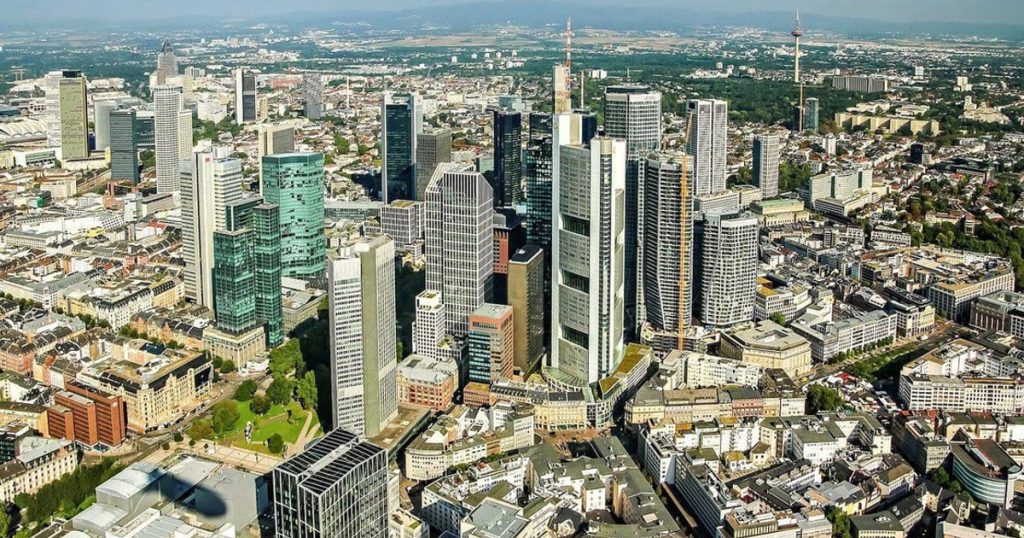
Germany’s economic outlook is shifting after years of uncertainty, with new 2026 forecasts signaling a stronger recovery for Europe’s largest economy. Once weighed down by weak growth and industrial challenges, Germany is regaining investor attention as global conditions improve. But the bigger question remains: is this the start of a lasting revival or only a temporary rebound?
Stronger growth signals return
Leading German economic institutes have upgraded their 2026 GDP growth forecast to 1.3%, more than double the earlier 0.6% projection. The revised outlook reflects stronger-than-expected economic performance, improving export activity, and increased public investment. Forecasts also point to 1.1% growth in 2027, although expansion is expected to slow to 0.4% in 2028 as structural challenges continue to weigh on the economy. Could this mark a turning point for Germany after a prolonged period of economic uncertainty?
Despite the improved outlook, Germany’s recovery remains fragile. Analysts continue to point to high energy costs, weak corporate investment, and cautious consumer spending as challenges that could slow progress.
Recent forecasts indicate that private consumption and business investment remain weaker parts of the recovery, showing that stronger GDP figures alone will not resolve deeper competitiveness issues. Germany’s future growth will depend on whether new investments create lasting improvements in productivity, innovation, and competitiveness rather than providing only temporary support.
Germany’s recovery faces new tests
Beyond Germany’s domestic recovery, its economic trajectory will also influence global markets as businesses and investors closely watch Europe’s industrial powerhouse. Germany’s performance remains central to the global economic outlook because of its influence in trade, manufacturing, and European economic stability. The country’s manufacturing sector and export strength continue to play an important role in regional and international economic activity.
Yet, the road ahead will require careful execution. Geopolitical tensions, energy market uncertainty, demographic pressures, and structural reforms will determine whether the recovery develops into lasting growth. Germany’s leading research institutes’ joint economic forecast emphasizes the importance of modernization, innovation, and strategic investment. As Germany accelerates technological progress, upgrades infrastructure, and transforms its industries, it can move beyond recovery and enter a new era of sustainable economic strength.
