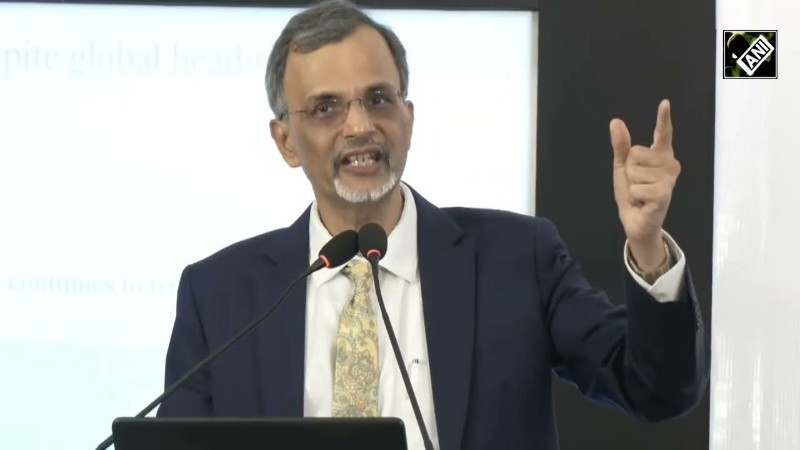
India’s economy is gaining speed heading into FY26, and the government’s top economist says the country may outperform earlier expectations. Chief Economic Adviser V. Anantha Nageswaran signaled that GDP growth could comfortably exceed 6.8%, reflecting stronger investment, tax-driven consumption, and improving foreign inflows.
Speaking at the CNBC-TV18 Global Leadership Summit 2025, he said his original 6.3–6.8% forecast now has an upward tilt, and a push toward 7% is possible once second-quarter figures are in. He noted that India’s recent performance has been resilient, with GDP rising 7.8% in the April–June 2025 quarter—the fastest in five quarters.
Agriculture, trade, hotels, financial services, and real estate led the gains. The January–March 2024 period recorded 8.4% growth, keeping India ahead of other major economies, including China, which grew 5.2% in the same April–June period.
Stronger spending
Nageswaran highlighted the impact of GST rationalisation and income-tax relief, which have left households with more disposable income and supported demand for goods and services. Lower indirect taxes on most mass-consumption products are helping stimulate retail activity and, in turn, lifting manufacturing and services.
Pointing to steady private-sector capital spending, Nageswaran noted improved flows after mixed results in recent years. Private capex reached ₹6.56 trillion in FY25, while public investment totaled ₹11.11 trillion. Foreign direct investment has strengthened as well, rising to $81.04 billion in FY25 from $71.28 billion a year earlier.
Investment lift outlook
The chief adviser said India must continue linking domestic manufacturing to global value chains. Recent changes in electronics duties and the production-linked incentive scheme aim to lower costs and build strategic resilience.
He also cautioned that US tariffs—up to 50% on Indian goods, including penalties tied to Russian crude—remain a drag. A bilateral trade deal could ease pressures and further lift growth prospects. He expects clearer direction once upcoming quarterly data is available.
